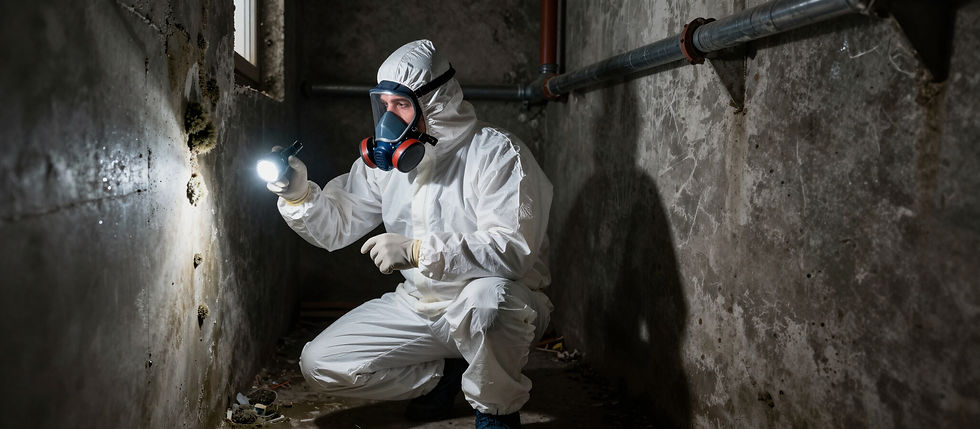
How Mold Starts
Mold is an opportunistic organism that thrives in Georgia's humid climate. It specifically targets damp, organic materials like drywall, wood, and insulation following water intrusions. Within just 24 to 48 hours of a leak or flood, microscopic spores begin to colonize, feeding on moisture and surfaces to grow. High indoor humidity levels above 60% are often enough to trigger widespread growth without a visible pipe burst. Understanding this lifecycle is critical because once mold takes root, it releases more spores into your air, creating an escalating cycle of structural damage and potential health risks for those inside.

Severe Health & Structural Risks
Health Hazards
Mold spores trigger respiratory issues, allergic reactions, and neurological symptoms. For those with asthma or compromised immune systems, prolonged exposure can lead to chronic illness or severe infections.
Structural Decay
Mold feeds on organic materials like wood, drywall, and insulation. Left unchecked, it causes wood rot and structural weakness, potentially compromising the integrity of floor joists and wall studs.
Air Quality Warning
Mold releases mycotoxins into your HVAC system, spreading contamination throughout the property. This results in persistent musty odors and a toxic indoor environment that requires professional air filtration.
Our Mold Remediation Process
A high-urgency approach to identifying, containing, and eliminating mold colonies to ensure your property meets strict health and safety standards.
ASSESS • CONTAIN • REMOVE • RESTORE
01
Professional Mold Discovery & Assessment
The first step in restoration is identifying the invisible threat. Our experts use moisture meters, thermal imaging, and surface sampling to determine the full extent of mold spread. In the high humidity of Georgia, what looks like a small spot in a bathroom or basement often hides a much larger colony in crawlspaces or behind drywall. We provide a detailed assessment report for your insurance claim, documenting precisely how water intrusion led to current growth.


02
Containment & Air Filtration
The most critical step in remediation is preventing cross-contamination. We establish airtight physical barriers using heavy-duty poly sheeting and utilize industrial-grade air scrubbers. These HEPA filtration units create negative air pressure, continuously drawing out airborne mold spores and replacing contaminated air with purified, scrubbed air. This ensures that while we clear the mold from the affected area, the rest of your home remains perfectly safe and unaffected.
03
Containment & Professional Removal
Safety is our non-negotiable priority. We establish strict containment using physical barriers and HEPA air filtration to prevent spore cross-contamination. Our certified crew then follows safe removal steps to eliminate mold at the source, treating structural materials with antimicrobial solutions to guarantee your home is a healthy environment once again.


Insurance Documentation
Mold claims require absolute precision. We document every discovery with high-resolution photos and detailed moisture readings. This audit trail proves the extent of the damage to your adjuster, ensuring your claim is backed by undeniable technical evidence and Southern Fire & Flood's professional assessment approach.

Post-Remediation Assessment
Once containment is removed, we perform final air quality testing to confirm your home is safe. We provide clear post-remediation steps to ensure Georgia's humidity doesn't lead to recurrence, including advice on HVAC maintenance and crawlspace management. Our documentation remains available for your permanent home records.